Recruiting
FAQ for Those Interested in Our Lab / 当研究室に興味をお持ちのかた向けのFAQ #
What skills can I gain in the lab? / 研究室でどのような能力が得られますか? #
You will gain the ability to apply information engineering—particularly the mathematics, programming, and data analysis knowledge you learned as an undergraduate—to the analysis of natural phenomena (in our case, especially life sciences). Conversely, applying data analysis and simulation to real-world problems often deepens your understanding of the methods themselves. In that sense, even if you’re not particularly interested in natural phenomena, if you want to run large-scale computations or analyze complex data, you’d be a good fit, and of course, you’re welcome.
情報工学、特に学部で学んできた数学・プログラミング・データ解析の知識を自然現象の解析(我々の場合は特に生命科学)へ応用する能力が得られます。また逆に、データ解析やシミュレーションは、実際のモノへ応用してあれこれ苦労することで、手法自身に対する理解が深まるということが多いです。その意味では、自然現象にあまり興味がなくても、とにかく大きな計算をしてみたいとか、複雑なデータを解析してみたい、という向きの人もマッチすると思いますし、もちろん歓迎します。
Is it okay if I don’t have biology knowledge? / 生物の知識がなくても大丈夫ですか? #
Yes, it’s fine. Research mainly requires knowledge of “protein structure,” but we study the basics together through reading sessions during the first 2-3 months, starting from scratch. We have read the following textbooks so far.
大丈夫です。研究では主に「タンパク質の構造」についての知識が求められますが、そのあたりの基礎は最初の2〜3ヶ月間で一緒に輪講を行ってゼロから勉強します。これまでに以下の教科書を読んできました。
- タンパク質の立体構造入門――基礎から構造バイオインフォマティクスへ 藤博幸・編
- Introduction to Modern Statistical Mechanics by David Chandler
- 生体分子の統計力学入門―タンパク質の動きを理解するために― by Daniel Zuckerman
- タンパク質科学 -生物物理学的なアプローチ- 有坂文雄・著
- deep learning for molecules & materials by Andrew White
- Protein Actions: Principles and Modeling by Ivet Bahar, Robert L. Jernigan, Ken A. Dill
- グラフニューラルネットワーク 佐藤竜馬・著
- 対称性と機械学習 岡野原大輔・著
Is it okay if I don’t have physics or chemistry knowledge? / 物理や化学の知識がなくても大丈夫ですか? #
The theory used in simulation is very basic, such as “Newton’s equation of motion (F=ma).” On the other hand, knowledge of “statistical mechanics” is sometimes needed to interpret complex simulation results. We will study this together with the faculty as needed.
シミュレーションに使っている理論は、「ニュートンの運動方程式(F=ma)」等のとても基礎的なものです。一方で、複雑なシミュレーション結果の解釈には「統計力学」の知識が必要な場面があります。これはその都度、教員と勉強していきます。
While it may be difficult for undergraduates, we recommend that graduate students systematically study statistical mechanics. The concepts of statistical mechanics appear in many aspects of machine learning, so it will surely be useful in the future. For a textbook focused on biomolecules, there is “Introduction to Statistical Mechanics for Biomolecules”. Professor Yamashita from the University of Tokyo has also created lecture videos explaining this textbook for reference.
学部生では難しいかもしれませんが、大学院生には体系的に統計力学を勉強してみることをおすすめしています。統計力学の概念は機械学習でも多くの場面で現れるのできっと将来的にも役に立ちます。生体分子向けの教科書としては、「生体分子の統計力学入門―タンパク質の動きを理解するために―」があります。この教科書を東大の山下先生が解説してくれている以下の講義動画もありますので参考にしてください。
What is daily life in the lab like? / 研究室の生活はどのような感じですか? #
We work hard on studying, but we try to make research enjoyable above all. There are no core hours, but on days without classes, please try to come to the lab at any time you can. Each person has their own PC and desk/chair, and there’s a coffee maker available for everyone to use.
勉強は頑張るけど、研究はとにかく楽しくと心がけています。コアタイムはありませんが、授業のない日はできるだけ、どの時間でも良いので研究室へ顔を出すようにしてください。一人一台のPCとデスク・チェアや、自由に使えるコーヒーメーカーなどがあります。
Weekly Schedule / 1週間のスケジュール
- Tuesday: Lab seminar for research progress and paper presentations / 火曜:研究進捗や論文紹介をする研究室セミナー
- Wednesday: Reading sessions where we read textbooks together / 水曜:教科書を一緒に読む輪講
- For new members, we hold short one-on-one meetings every week in April / 新しく参加した人は、4月は毎週1対1の短いミーティング(1on1)を行います
- Once thesis work begins, we have individual meetings about once every two weeks for 30 minutes to 1 hour / 卒研が始まったら2週間に一度くらいで、30分〜1時間の個別ミーティングを行います
Annual Schedule / 1年間のスケジュール
- March–July: Focus on reading sessions and seminars, job hunting / 3月〜7月:輪講とセミナーが中心、就活
- July–August: Paper presentations, narrowing down research themes, graduate school entrance exams / 7月〜8月:論文紹介、研究テーマ絞り込み、大学院入試
- August–December: Working on thesis research, mid-term presentations / 8月〜12月:卒研へ取り組む、中間発表会
- December–February: Writing thesis, final presentations / 12月〜2月:卒論執筆、最終発表会
About the Lab Rooms / 研究室の様子 #
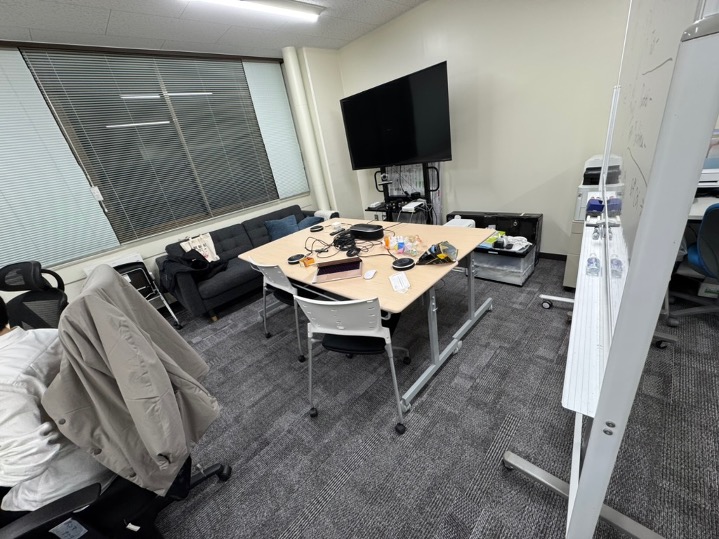
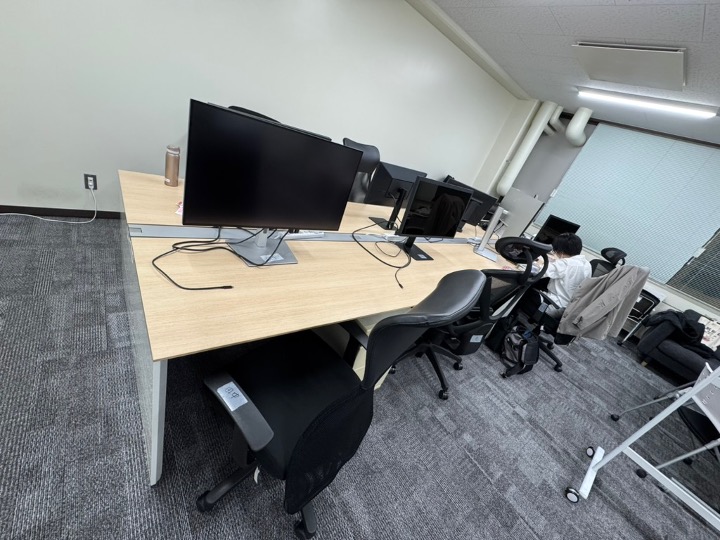
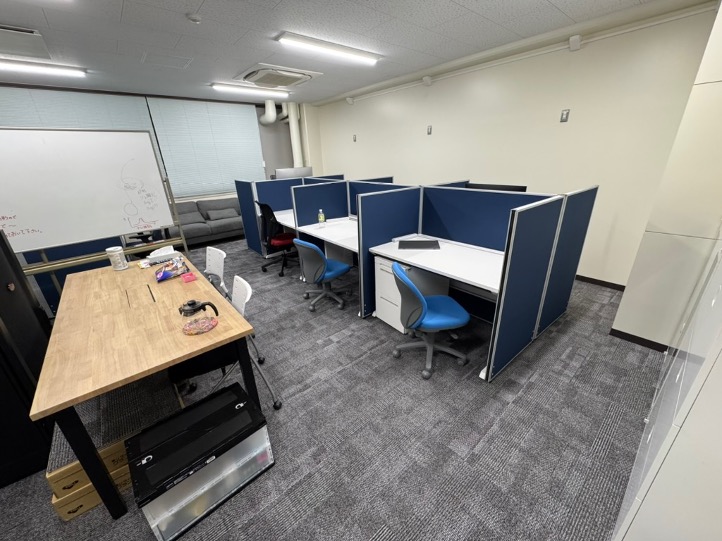
The lab uses two rooms on the 2nd floor of the Information Engineering building: Room 208 and Room 218. Each person has their own PC and desk, providing an environment where you can concentrate. There are also meeting spaces, whiteboards, and sofas, creating an atmosphere conducive to discussion and relaxation.
研究室は情報工学科棟2Fの208号室と218号室の2部屋を使用しています。一人一台のPCとデスクがあり、集中して作業できる環境です。ミーティングスペースやホワイトボード、ソファもあり、議論や休憩もしやすい雰囲気です。
Are there lab events? / 研究室のイベントはありますか? #
We hold a welcome/farewell party in spring and a year-end party at the end of the year. Participation is not mandatory; only those who can attend do so. Recently, we’ve also been playing futsal with other labs.
春に歓送迎会、年末に忘年会を行っています。参加は強制ではありませんので、参加できる人だけが参加します。また、最近は他研究室と一緒にフットサルもやっています。
Can I do job hunting and study for graduate school exams? / 就活や大学院試験勉強はできますか? #
Job hunting and graduate school advancement are important life events, so we will cooperate as much as possible. Please prioritize them. Past alumni include those who advanced to Saitama University’s graduate school, got jobs at manufacturers and startups, passed national civil service exams, and took and passed exams at other universities’ graduate schools.
就活や大学院進学は人生の重要イベントですのでできる限り協力します。優先して進めてください。これまでのOB/OGには、埼玉大の院へ進学する以外に、メーカーやスタートアップへの就職、国家公務員試験の合格、他大学の院を受験して合格した人がいます。
What are the past career paths? / 過去の進路は? #
Lab alumni are active in a wide range of fields, from graduate school to major companies and startups.
研究室の卒業生は、大学院進学から大手企業・スタートアップまで幅広い分野で活躍しています。
Graduate School / 大学院進学
- The University of Tokyo Graduate School / 東京大学大学院
- Tokyo Tech Graduate School (now Institute of Science Tokyo) / 東京科学大学大学院(旧東工大)
- Saitama University Graduate School / 埼玉大学大学院
IT/Software / IT・ソフトウェア
- Hitachi, Ltd. / 日立製作所
- NTT DATA i / NTTデータアイ
- Japan Research Institute / 日本総研
- Ricoh IT Solutions / リコーITソリューションズ
- Uchida Yoko / 内田洋行
- NSW
- Nihon System / 日本システム
- KSK
- Skywill / スカイウイル
- Bank of Innovation / バンク・オブ・イノベーション
- 600 (Startup) / 600(スタートアップ)
Manufacturers (including R&D positions) / メーカー(研究開発職含む)
- Fujifilm / 富士フイルム
- Toyo Seikan Holdings / 東洋製罐ホールディングス
- Kureha / クレハ
Government and Public Institutions / 官公庁・公的機関
- National Civil Servant (Japan Patent Office) / 国家公務員(特許庁)
- National Institution for Youth Education / 国立青少年教育振興機構
What conferences do you attend? / どのような学会へ参加しますか? #
So far, we have mainly attended science-oriented conferences like the following. We plan to gradually participate in engineering-oriented conferences as well.
今のところ、以下のような理学系の学会が多いです。今後、工学系の学会へも徐々に参加していく予定です。
- Biophysical Society of Japan / 生物物理学会
- Biophysical Society
- Physical Society of Japan / 日本物理学会
- Protein Science Society of Japan / 蛋白質科学会
- Molecular Simulation Discussion Meeting / 分子シミュレーション討論会
- CBI Society / CBI学会
Domestic conferences are held in cities across Japan such as Sapporo, Nagoya, and Osaka, and students actively participate and present. At international conferences, there are opportunities to interact with researchers from around the world, such as the Biophysical Society Annual Meeting held in San Diego, USA.
国内学会は札幌、名古屋、大阪など全国各地で開催され、学生も積極的に参加・発表しています。国際学会では米国サンディエゴで開催されるBiophysical Society Annual Meetingなど、世界中の研究者と交流する機会があります。

